For plumbers, electricians, locksmiths, heating & home services
You can't answer the phone with your hands under a sink
Maeby picks up while you're on the job, quotes your call-out rate, books the work into your diary, and captures the address and fault before the caller hangs up.
UK & EU data residency · No call recordings

- Answered while you're mid-job, on a ladder, or driving
- 1st ringAnswered while you're mid-job, on a ladder, or driving
- Including the evening and weekend emergency calls
- 24/7Including the evening and weekend emergency calls
- Forward your existing number and keep it
- No appForward your existing number and keep it
Where the phone costs you money
The call comes while you're already working
Inbound work doesn't arrive at convenient times. It arrives when both engineers are under a sink, when you're halfway up a loft ladder, or when you're driving between jobs and can't safely pick up.
- Answering badly mid-job is worse than not answering: you can't take details properly
- Callbacks happen hours later, by which point the caller has booked someone else
- The busier you are, the more work you lose

Emergency calls arrive out of hours
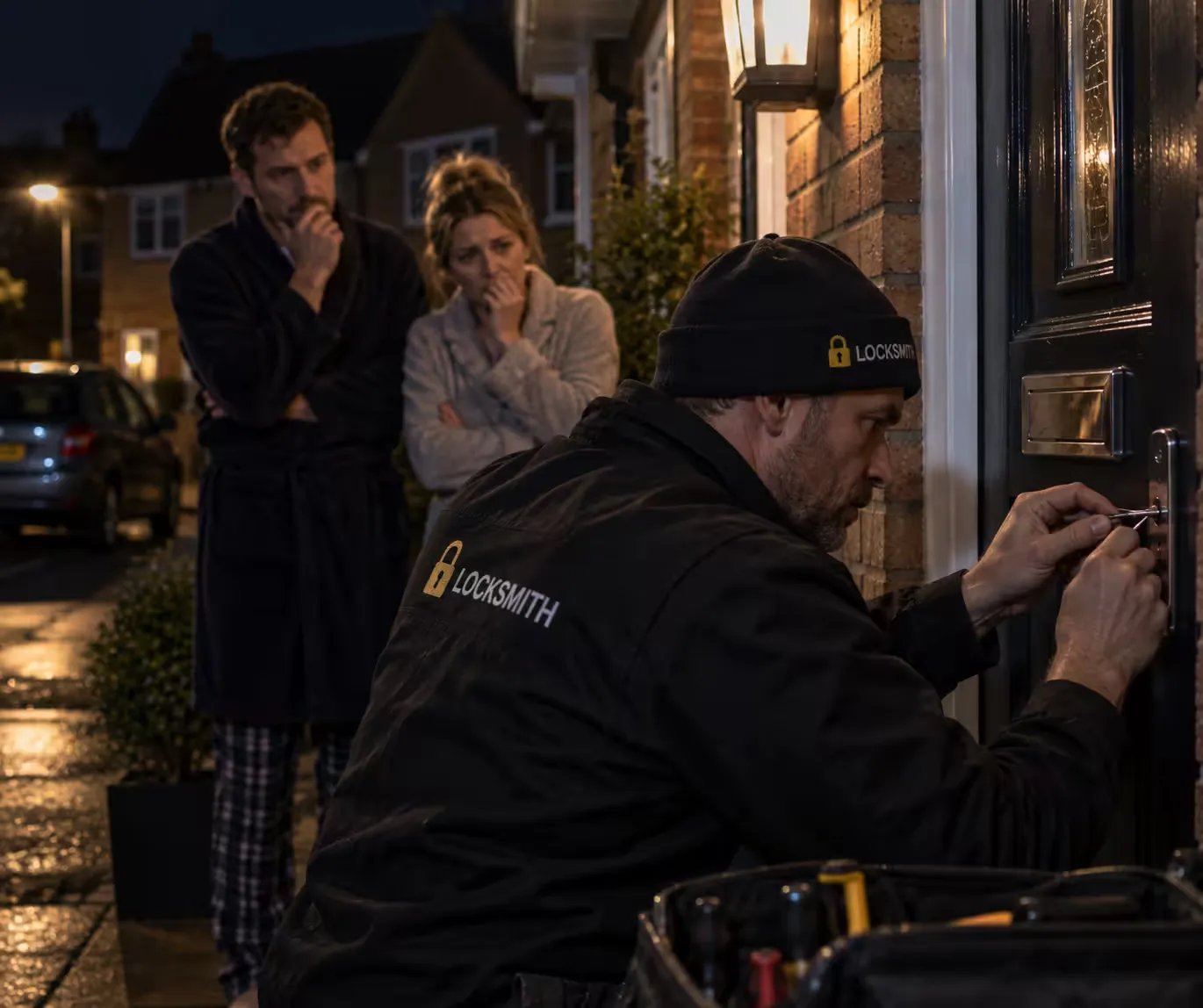
A burst pipe or a lockout at 9pm is the highest-value call you'll get all week, and it's the one most likely to hit voicemail. Whoever picks up first gets the job.
- Most callers with an urgent problem won't leave a voicemail
- They work down a list until someone answers
- Out-of-hours rates are where the margin is
The paperwork happens twice
Details get taken on a scrap of paper or in your head, then re-entered into the diary and the invoicing system later that evening. Things get lost in the gap.
- Addresses and fault descriptions get garbled between the call and the job sheet
- Quoting from memory leads to inconsistent pricing
- Admin lands at the end of a ten-hour day

What your agent handles
Tools are switched on per agent and configured with your details — no bespoke development.
Quotes your actual rates
Call-out charge, hourly rate, out-of-hours premium, and what's included, answered from your figures, consistently, every time.
Captures the job properly
Address, access notes, what's wrong, how urgent, and a callback number, structured rather than scribbled.
Books into your diary
Offers slots you can actually make and confirms the appointment on the call.
Triages emergencies
You define what's urgent. Genuine emergencies transfer straight to your mobile; everything else waits for the morning.
Handles the tyre-kickers
Answers the price questions that were never going to become jobs, without spending your evening on them.
Covers the whole team
One number, or one per engineer. Calls route by area or availability and log against the right person.
The maths on a missed call
Trades businesses tend to underestimate this because a missed call leaves no evidence. It doesn’t appear in your accounts, your diary, or your invoicing system. Nothing happened, except that somebody else did the work.
Take your three numbers: calls missed per week, the proportion of answered calls that become jobs, and your average job value. For a two-van firm missing twelve calls a week, converting 40%, at £180 a job, that’s roughly £45,000 a year of work that never entered the pipeline. Halve it to be conservative. It’s still the cheapest revenue available to you: the work was already won, and the only thing missing was someone to pick up.
Why “answered” isn’t the same as “handled”
Plenty of services will pick up the phone. Far fewer will finish the job.
The difference is whether whoever answers can do three things: quote your rate, see when you’re free, and put the work in the diary. A message-taking service can’t do any of them, so the caller is still waiting on you. They’ve just been told you’ll ring back, which from their side of the call is voicemail with better manners.
That’s the bar worth holding any option to, including this one: whether the caller got what they rang for, not whether someone picked up.
Where it fits around how you work
Most trades start with two rules and adjust from there:
- After six rings, the agent picks up. You keep every call you’re free to take.
- Outside working hours, the agent takes everything, transferring only what you’ve defined as a genuine emergency.
That covers the two moments you lose work, mid-job and after close, without changing anything about how you run the day. You’ll want to read the first week of transcripts and tighten the wording; after that it mostly runs itself.
Compliance
Built for GDPR,not retrofitted to them.
The constraints that make voice AI awkward in regulated markets were designed in from the start.
- Processed and stored in Europe
- Calls, transcripts, and summaries stay in Europe. AI models are also based there and have zero data retention policies.
- Audio is never stored
- Speech is transcribed as the call happens and discarded.
- Everything a caller said expires
- Transcripts, caller numbers, and messages are deleted automatically 90 days after the call. Not a setting you have to remember.
- Erase customer data
- If a caller asks to be forgotten, you can erase every trace of them from the dashboard.
Frequently asked questions
Can I keep my existing number?
Yes. Forward your current number to the agent and callers notice nothing except that someone always picks up. You can also have a new UK number provisioned, though geographic (01/02) numbers need a verified UK business address first.
What if I want to answer the call myself?
That's the normal setup. The agent picks up only when you don't: after a set number of rings, or outside your working hours. You keep the calls you can take.
Will it quote the wrong price?
It quotes from the rates you give it and nothing else. If someone asks about work you haven't priced, it says so and takes a message rather than guessing. Inventing answers is blocked at the platform level.
Does it work for emergency call-outs?
Yes, and that's usually the strongest case. You define what counts as an emergency and the agent transfers those calls straight through to your mobile while handling routine enquiries itself.
What does it do with the job details?
Every call produces a transcript, a summary, and a structured record: caller, number, address, and what they need. That's available in the dashboard immediately and can be written into your CRM.
How much does it cost compared to an answering service?
Plans start at $99/month including 300 minutes. A human answering service that only takes messages typically runs £300–800/month. The difference is that this one books the job rather than handing you a callback list.
Hear it answeryour phone.
Set up an agent, try it in your browser, and put it on a real number.